AI 时代的稀缺能力:如何习得"品味"
本文来自微信公众号: SCOTTHYOUNG ,作者:斯科特·扬
在我最近关于AI如何塑造学习和工作未来的文章中,许多评论中得出的一个结论是良好品味的重要性。
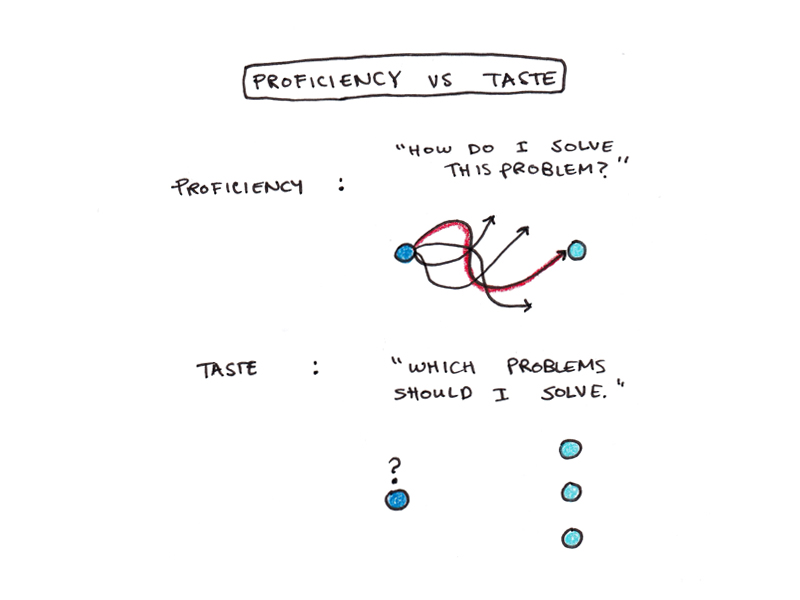
For instance,AI agents can now write a lot of code,but human experts still seem better at deciding what sorts of code ought to be written.AI tools are good at finding solutions,but less useful for figuring out the best problems to solve in the first place.
例如,AI代理现在可以编写大量代码,但人类专家似乎仍然更擅长决定应该编写什么样的代码。AI工具擅长找到解决方案,但在找出首先应该解决的最佳问题方面用处较小。
In other words,current AI may be proficient,but it lacks taste.
换句话说,当前的AI可能很熟练,但它缺乏品味。
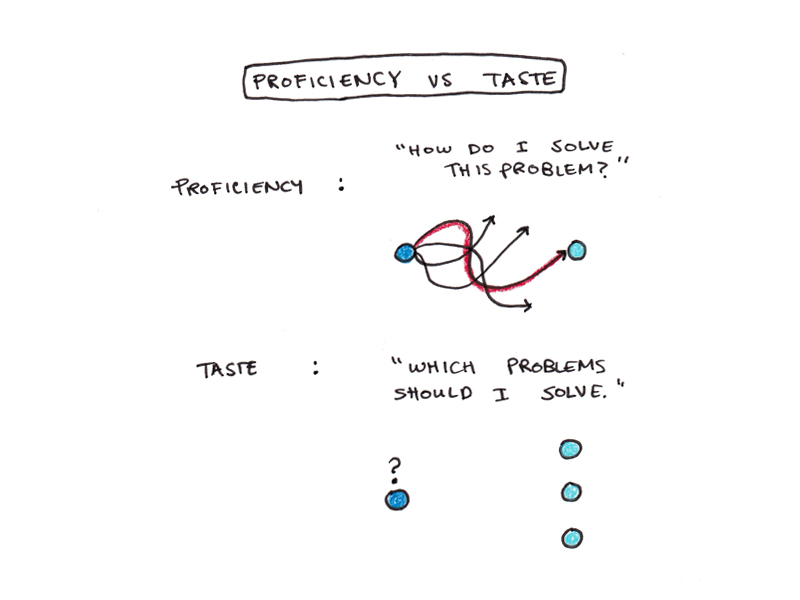
But what exactly is taste?And,if taste matters(and may be a remaining bastion of human ingenuity),how do you actually acquire it?
但品味到底是什么?如果品味很重要(而且可能是人类创造力的最后堡垒),你究竟如何获得它?
What Exactly Is Taste?
品味到底是什么?
Good taste is hard to define,but easy to understand.Taste is the ability to discern good ideas from bad ones,promising opportunities from dead ends,elegant solutions from the merely functional.
良好的品味很难定义,但很容易理解。品味是辨别好想法和坏想法、有前景的机会和死胡同、优雅解决方案和仅仅功能性解决方案的能力。
Within cognitive science,there have been two competing perspectives on the nature of taste.
在认知科学中,关于品味的本质存在两种相互竞争的观点。
One school of thought says that taste is simply a subset of general expertise.This was the perspective of the Nobel laureate Herbert Simon.He argued that the way humans find good problems to work on is the same way they learn to play chess or solve logic puzzles.
一种思想流派认为品味只是一般专业知识的一个子集。这是诺贝尔奖获得者赫伯特·西蒙的观点。他认为人类找到好问题的方式与他们学习下棋或解决逻辑谜题的方式相同。
A different school of thought argued that finding good problems was distinct from solving them.Mihaly Csikszentmihalyi was a proponent of this viewpoint.In his book studying art students,co-authored with Jacob Getzels,they found that taste(as I’m calling it)was associated with later artistic success.
另一种思想流派认为找到好问题与解决它们是不同的。米哈里·契克森米哈伊是这一观点的支持者。在他与雅各布·盖策尔斯合著的研究艺术学生的书中,他们发现品味(我这样称呼它)与后来的艺术成就相关。
I suspect both sides are correct.Taste seems to be acquired like regular proficiency,through practice,observation and feedback,but the two are distinct.It’s possible to have good taste without proficiency(as an insightful critic)or proficiency without taste(as a skilled journeyman dependent on the eye of a master).
我怀疑双方都是正确的。品味似乎像常规熟练度一样通过实践、观察和反馈获得,但两者是不同的。可以有好品味但没有熟练度(作为有洞察力的评论家),也可以有熟练度但没有品味(作为依赖大师眼光的熟练工匠)。
The Mental Mechanisms of Discernment
辨别的心理机制
I agree with Simon that taste is a kind of expertise.That means it relies on both intuition and understanding.
我同意西蒙的观点,品味是一种专业知识。这意味着它依赖于直觉和理解。
Intuition sounds mystical,but it’s mostly just memory in disguise.When we have an intuition that something is good,it’s because we’re pattern-matching it to an example of something good we saw in the past.
直觉听起来很神秘,但它主要只是伪装的记忆。当我们有直觉认为某事是好的时,那是因为我们将它与过去看到的好事物的例子进行模式匹配。
This may sound oversimplified,but compelling work in many fields shows that experts build huge libraries of perceptual chunks,with the number of chunks rivaling the number of words you know in your native language,and use these to quickly form an intuitive impression about what to do in a given situation.
这听起来可能过于简化,但许多领域的有力研究表明,专家建立了巨大的感知组块库,组块的数量可与你母语中所知单词的数量相媲美,并使用这些来快速形成对特定情况下该做什么的直觉印象。
Given intuition is largely memory,this component of expertise requires a lot of exposure to acquire.The sheer quantity of pattern knowledge needed for expert performance was a major motivation for the 10,000 hour rule,or the observation that it generally takes even the greatest creators ten years before they produce their first masterpiece.
鉴于直觉主要是记忆,专业知识的这一组成部分需要大量接触才能获得。专家表现所需的模式知识的绝对数量是一万小时法则的主要动机,或者说即使是最伟大的创作者通常也需要十年时间才能创作出他们的第一部杰作。
Understanding is largely a process of building mental models.These models are mental simulations you generate of a situation so you can figure out an appropriate move.Unlike intuition,understanding is an attention-demanding process,but it can provide more reliable results(at least when you don’t need to consider more than a few different possibilities at once).
理解在很大程度上是建立心理模型的过程。这些模型是你对情境生成的心理模拟,以便你能找出适当的行动。与直觉不同,理解是一个需要注意力的过程,但它可以提供更可靠的结果(至少当你不需要一次考虑几个以上的不同可能性时)。
Taste seems to involve both intuition(quick judgements about the quality of a work or the potential in a given direction),as well as understanding(effortful simulations to anticipate likely design problems and opportunities).
品味似乎涉及直觉(对作品质量或特定方向潜力的快速判断)以及理解(费力的模拟以预测可能的设计问题和机会)。
How Do You Learn Taste?
你如何学习品味?
While some of the same mental mechanisms may underlie both taste and proficiency,there are differences.
虽然相同的一些心理机制可能是品味和熟练度的基础,但存在差异。
Taste,for instance,is largely tacit.The rules that guide it can’t easily be written down.Those rules that can be articulated usually apply only to a limited set of cases and have so many exceptions as to be unhelpful to a person without an intuitive sense for them.
例如,品味在很大程度上是隐性的。指导它的规则不容易写下来。那些可以表达的规则通常只适用于有限的情况,并且有如此多的例外,以至于对没有直觉感的人来说没有帮助。
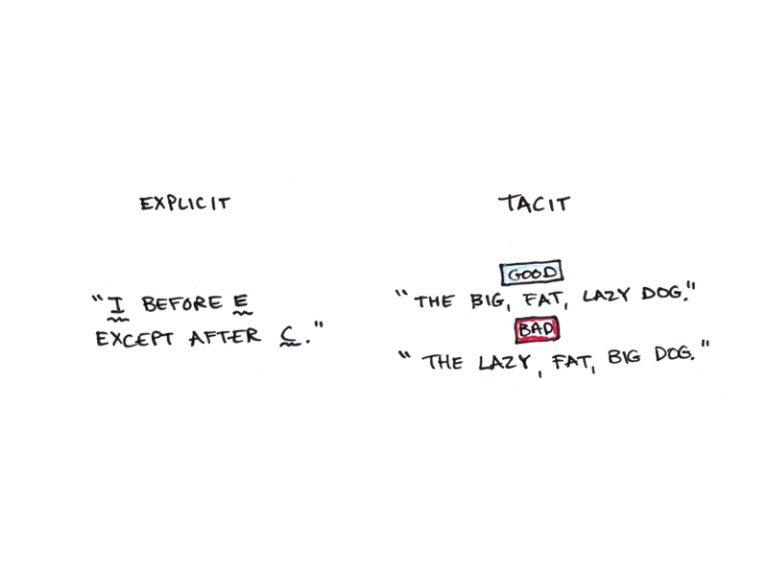
Proficiency in skills,of course,also depends on tacit knowledge,but the proportion is smaller.Syntax,algorithms and best practices are all easy to state,but what makes code elegant or a codebase maintainable is difficult to put into words.
当然,技能的熟练度也依赖于隐性知识,但比例较小。语法、算法和最佳实践都很容易陈述,但是什么使代码优雅或代码库可维护却很难用语言表达。
That taste is tacit may help to explain why AI models struggle with it.LLM pretraining is essentially nothing but book learning,ingesting all of the world’s texts,but it omits any expert judgements that could not be expressed with words.
品味的隐性特征可能有助于解释为什么AI模型在这方面很挣扎。LLM预训练本质上只是书本学习,摄取世界上所有的文本,但它省略了任何无法用语言表达的专家判断。
It has sometimes been alleged that the only way to acquire tacit knowledge is through direct experience.After all,if someone can’t tell you what to do,you need to figure it out yourself.
有时有人声称获得隐性知识的唯一方法是通过直接经验。毕竟,如果别人不能告诉你该做什么,你需要自己弄明白。
This no doubt plays a role in how experts themselves learn to judge quality.Practice with feedback certainly fine-tunes our sensibilities.(And,interestingly enough,this appears to be the next frontier for AI research,with labs creating countless bespoke environments for agents to learn from practice and feedback,rather than simply feeding in more text.)
这无疑在专家自己学习判断质量方面起着作用。带反馈的实践肯定能微调我们的敏感性。(有趣的是,这似乎是AI研究的下一个前沿,实验室为代理创建无数定制环境以从实践和反馈中学习,而不是简单地输入更多文本。)
However,I suspect that practice and feedback probably play only a supporting role in how people actually acquire taste.
然而,我怀疑实践和反馈可能只在人们实际获得品味方面起支持作用。
Many people exhibit taste long before they have done much work.I’ve met various writers who had less than a year of experience but quickly began to garner attention and an audience through their writing.While their proficiency improved with practice,it was clearly guided by pre-existing taste.
许多人在做大量工作之前很久就表现出品味。我遇到过各种作家,他们的经验不到一年,但很快就开始通过他们的写作获得关注和受众。虽然他们的熟练度随着实践而提高,但显然是由预先存在的品味引导的。
In other words,their practice efforts were efficient because they already had an extremely strong feedback signal from their own internal sense of quality.They didn’t need audience feedback about what was good or bad to inform them very much.(Which,incidentally,is such a noisy signal that it’s unlikely it plays a major role in how people acquire creative skills.)
换句话说,他们的实践努力是高效的,因为他们已经从自己内在的质量感中获得了极强的反馈信号。他们不需要关于什么好什么坏的观众反馈来告知他们太多。(顺便说一句,这是一个如此嘈杂的信号,以至于它不太可能在人们获得创造性技能方面起主要作用。)
Additionally,in spite of the tacit nature of taste,there appears to be a lot of direct transmission of taste from mentor to pupil.Art movements,scientific dynasties and innovation hubs all seem to point to the idea that much of our taste is acquired through guided observation,rather than direct experience.
此外,尽管品味具有隐性特征,但似乎存在大量从导师到学生的品味直接传递。艺术运动、科学王朝和创新中心似乎都指向这样一个想法,即我们的大部分品味是通过引导观察而不是直接经验获得的。
I learn what’s good mostly by seeing good and bad examples.If we had to generate the examples ourselves,few people would produce anything of sufficient quality to bootstrap the learning process.
我主要通过看到好的和坏的例子来学习什么是好的。如果我们必须自己生成例子,很少有人会产生足够质量的东西来启动学习过程。
The role of transmission in taste suggests that even if the rules for taste can’t be written down,they are communicated somehow.
品味传递中的作用表明,即使品味的规则无法写下来,它们也以某种方式被传达。
My guess is that the reason taste is difficult to teach through a book is because much of it is communicated through the emotional judgements people make.The students in an elite research lab witness their advisor’s reactions to various experiments,ideas,paradigms and problems.They come to embody those same emotional reactions,even if the basis for those reactions is left unstated.
我的猜测是,通过书本教授品味困难的原因是因为它的大部分是通过人们做出的情感判断来传达的。精英研究实验室的学生目睹他们的导师对各种实验、想法、范式和问题的反应。他们开始体现相同的情感反应,即使这些反应的基础没有明说。
This makes developing taste more of a process of enculturation than one of training.It is something you acquire through close contact with other people with good taste rather than through only individual observation or direct experience.
这使得培养品味更像是一个文化适应的过程而不是训练的过程。它是你通过与其他有良好品味的人密切接触而获得的东西,而不是仅仅通过个人观察或直接经验。
Perhaps one possible implication of the rising value of taste over proficiency is a renewed value placed on person-to-person knowledge transmission over book-learning alone.It would be an ironic outcome if the democratization of knowledge on the internet ended up making such knowledge a commodity,with value in careers coming from the kind of esoteric knowledge that can only be communicated face-to-face.
也许品味价值超过熟练度的上升的一个可能含义是,相对于单纯的书本学习,人与人之间的知识传递重新获得重视。如果互联网上知识的民主化最终使这种知识成为一种商品,而职业中的价值来自只能面对面传达的那种深奥知识,那将是一个讽刺的结果。
Footnotes
-
The term“taste”as I’m using it here isn’t used in the literature,but terms like“problem finding”versus“problem solving”are used to refer to parallel concepts.
#时代的稀缺能力如何习得quot品味quot